No products in the cart.
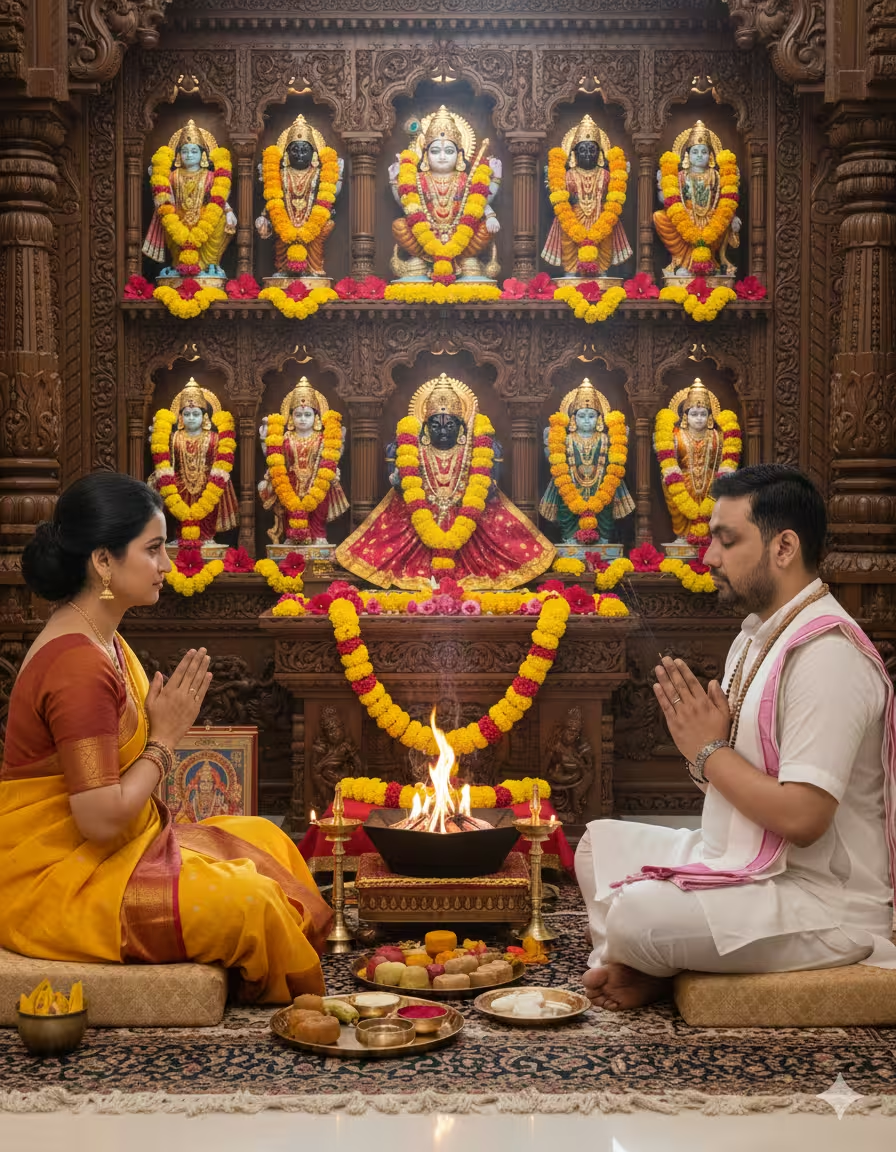
Dashaavtar Puja Online Booking
Price range: ₹11,200.00 through ₹20,700.00
Benefits of Dashaavtar Puja:
- Provides complete divine protection and stability
- Removes recurring obstacles and negativity
- Encourages righteous living and clarity
- Supports spiritual growth and inner balance
- Brings peace, prosperity, and long-term harmony
Recent Views
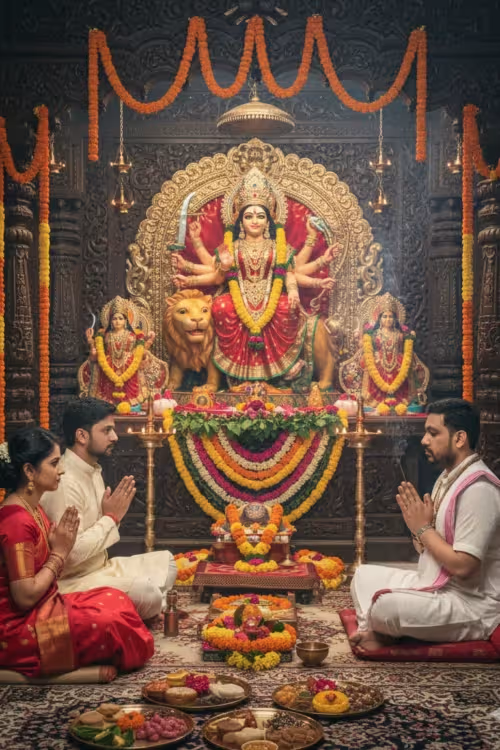
Durga Sahasranamam Online Booking
Original price was: ₹26,000.00.₹23,500.00Current price is: ₹23,500.00.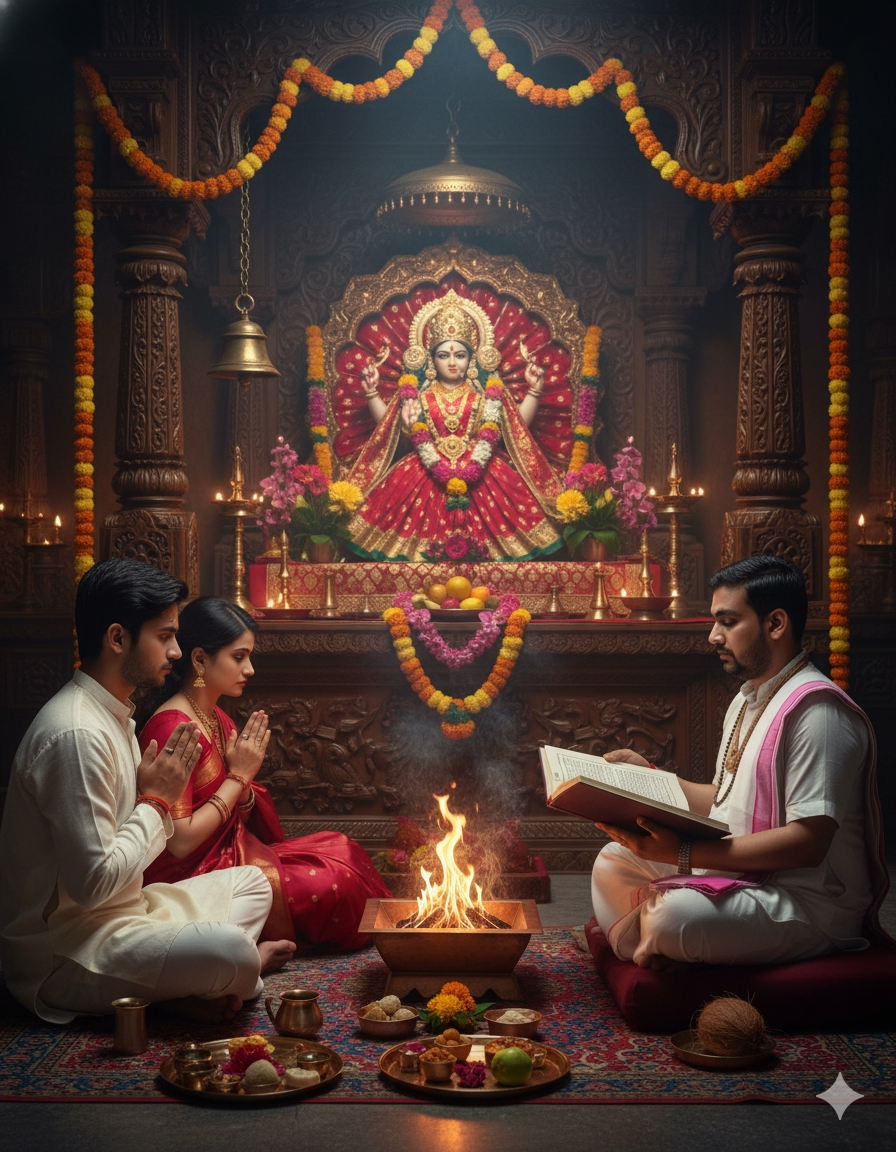
Gupt Navratri Puja Online Booking
Original price was: ₹27,000.00.₹24,800.00Current price is: ₹24,800.00.
Description
Dashaavtar Puja Online Booking
Dashaavtar Puja honours the ten principal incarnations of Bhagwan Vishnu. Each avatar represents divine guidance, protection of dharma, courage, wisdom, compassion, and the restoration of balance.
Families arrange this sacred ceremony to seek peace, stability, spiritual strength, family wellbeing, and positive direction. Moreover, the teachings of the ten avatars inspire devotees to face different stages of life with patience and responsibility.
Hindi Quote:
“जब-जब धर्म की हानि होती है, तब-तब भगवान संसार का मार्गदर्शन करने के लिए अवतार लेते हैं।”
Vishnu Mantra:
ॐ नमो नारायणाय॥
This sacred mantra honours Lord Vishnu as the divine preserver. Therefore, devotees chant it while praying for peace, protection, wisdom, stability, and spiritual awareness.
Dashaavtar Puja Online Packages
Choose a suitable package according to the required mantra count, number of priests, and ritual arrangement. In addition, both packages include proper sankalp, Lord Vishnu worship, Dashaavtar prayers, mantra chanting, sacred offerings, and concluding prayers.
| Puja Details | Chants | Amount (INR) | Priests | Duration |
|---|---|---|---|---|
| Dashaavtar Puja | 11,000 | ₹11,200 | 3 | 1 Day |
| Dashaavtar Puja | 21,000 | ₹20,700 | 5 | 1 Day |
What Is Dashaavtar Puja?
Dashaavtar Puja combines the worship of ten well-known incarnations of Lord Vishnu. The word “Dasha” means ten, while “Avatar” refers to a divine incarnation or manifestation.
Hindu traditions connect these avatars with different periods of crisis, imbalance, and spiritual need. Consequently, every incarnation offers a unique lesson about courage, humility, devotion, justice, wisdom, or responsible action.
During the ceremony, experienced priests conduct Ganesh Puja, Kalash Sthapana, family sankalp, Lord Vishnu worship, Dashaavtar prayers, mantra chanting, sacred offerings, Havan where included, Shanti Path, and aarti.
The Sacred Meaning of the Ten Vishnu Avatars
The ten avatars represent different forms of divine guidance. Although the commonly followed sequence remains similar, some traditions include Buddha while others include Balarama.
Therefore, the final worship method may follow the devotee’s family tradition and Pandit Ji’s guidance.
Matsya Avatar
Matsya, the fish incarnation, represents protection during crisis and the preservation of sacred knowledge. This form encourages devotees to remain alert, prepared, and responsible during uncertain situations.
Kurma Avatar
Kurma, the tortoise incarnation, symbolises patience, stability, and a strong foundation. Moreover, this avatar reminds devotees that meaningful progress requires endurance and balance.
Varaha Avatar
Varaha, the boar incarnation, represents courage and the restoration of balance. His story inspires devotees to protect what is valuable and respond bravely during difficult circumstances.
Narasimha Avatar
Narasimha, the half-man and half-lion form, represents courage, justice, and the protection of devotee Prahlad. As a result, this avatar inspires faith and strength against injustice.
Vamana Avatar
Vamana, the dwarf Brahmin incarnation, represents humility, wisdom, and the responsible use of power. His story teaches devotees to avoid pride and respect divine order.
Parashurama Avatar
Parashurama represents discipline, duty, strength, and control over anger. At the same time, his story reminds devotees that power must remain under the guidance of wisdom.
Shri Ram Avatar
Lord Rama represents truth, dignity, compassion, courage, and responsible conduct. In addition, his life inspires people to fulfil family and social duties with patience.
Shri Krishna Avatar
Shri Krishna represents wisdom, devotion, joy, strategy, compassion, and spiritual guidance. His teachings encourage responsible action without unhealthy attachment to results.
Buddha or Balarama Tradition
Some traditions include Bhagwan Buddha in the Dashaavtar sequence, whereas others include Balarama. Hence, Pandit Ji may follow the family’s spiritual tradition during the ceremony.
Kalki Avatar
Kalki represents the future restoration of dharma and the end of destructive conduct. Symbolically, this avatar encourages devotees to reject injustice and follow truth.
Spiritual Importance of Dashaavtar Worship
The ten avatars show how divine guidance appears according to the needs of each age. Every incarnation responds to a different type of imbalance, confusion, injustice, or spiritual challenge.
Furthermore, their stories encourage courage, humility, patience, compassion, discipline, and responsible leadership. Thus, devotees can connect ancient teachings with modern family and professional responsibilities.
This ceremony also reminds families that prayer should accompany honest action. Spiritual worship supports reflection, while practical decisions and personal responsibility remain equally important.
Benefits of Dashaavtar Puja
- Helps seek the blessings of Bhagwan Vishnu
- Supports prayers for family peace and spiritual harmony
- Encourages courage, wisdom, and responsible conduct
- Creates a devotional atmosphere through Vishnu mantras
- Supports stability during changing life situations
- Encourages respect for truth and dharma
- Helps families understand the teachings of Vishnu avatars
- Supports devotion, gratitude, and positive thinking
Who Should Book This Puja?
This sacred worship may suit Vishnu devotees, families seeking spiritual peace, and people beginning an important new phase of life.
- Devotees of Bhagwan Vishnu and Narayan
- Families seeking peace and spiritual harmony
- People beginning a new home, project, or responsibility
- Families arranging an important religious ceremony
- Devotees seeking Vishnu mantra chanting
- People wanting to understand the ten avatars
- NRIs unable to arrange an experienced local priest
- Families seeking guided online Puja participation
When Can Dashaavtar Puja Be Performed?
Devotees may arrange this ceremony on Thursdays, Ekadashi, Purnima, Vaikuntha Ekadashi, Vishnu-related festivals, birthdays, anniversaries, house ceremonies, or another auspicious occasion.
Alternatively, families may select a convenient date with a positive sankalp. Pandit Ji can confirm an appropriate time according to the location, time zone, family tradition, and chosen package.
How Dashaavtar Puja Is Performed
First, Pandit Ji confirms the prayer purpose, family details, date, and selected package. Next, the priest prepares the sacred place and arranges the required puja items.
Afterward, Ganesh Puja, purification prayers, Guru Vandana, Kalash Sthapana, and family sankalp take place. The priest then invokes Bhagwan Vishnu and offers prayers to the ten divine avatars.
Finally, mantra chanting, sacred offerings, Havan where included, Purnahuti, Shanti Path, and aarti complete the ceremony.
- Selection of a suitable date and muhurat
- Ganesh Puja and preliminary purification
- Guru Vandana and Kalash Sthapana
- Devotee or family sankalp
- Bhagwan Vishnu invocation
- Worship of the ten Vishnu avatars
- Vishnu mantra and stotra chanting
- Flowers, Tulsi leaves, fruits, and sacred offerings
- Dashaavtar Havan, where included
- Purnahuti and Shanti Path
- Vishnu aarti and final blessings
Important Guidelines During the Puja
Devotees should maintain a peaceful and respectful mindset throughout the ceremony. Additionally, they should avoid unnecessary distractions, arguments, and harmful intentions.
Simple sattvic food and clean clothing may support the devotional atmosphere. However, the final guidance depends on the selected ritual and the devotee’s family tradition.
Faith remains important, but responsible action should continue alongside prayer. Therefore, devotees should seek qualified medical, legal, financial, or professional advice whenever required.
Suggested Puja Samagri
- Bhagwan Vishnu or Dashaavtar image
- Kalash and clean water
- Coconut and mango leaves
- Yellow flowers and flower garlands
- Tulsi leaves
- Haldi, kumkum, sandalwood, and akshat
- Fruits, sweets, and sattvic prasad
- Diya, cotton wicks, and ghee
- Incense sticks and camphor
- Betel leaves and betel nuts
- Yellow cloth and sacred thread
- Havan samagri, where Havan is included
The final samagri list depends on the selected package, family tradition, Havan requirements, and location. Therefore, Pandit Ji will provide the complete list before the ceremony.
Details Required for Sankalp
Please share the following information after completing the booking:
- Full name of the main devotee
- Father’s or spouse’s name, where required
- Date of birth, if available
- Time and place of birth, where required
- Gotra, if known
- Current city and country
- Preferred puja date and time
- Prayer purpose or sankalp
- Names of family members to include
- Special occasion details, where applicable
You may personally take the sankalp through a live video call. Alternatively, Pandit Ji may take the sankalp on your behalf by using the details submitted during booking.
Online and Offline Puja Services
Online participation allows devotees to join from India or abroad. Therefore, families living in the USA, UK, Canada, Australia, Singapore, UAE, and other countries can arrange the ceremony without finding a local priest.
Depending on the selected package, devotees may join the sankalp, mantra chanting, Havan, and aarti through live video. Moreover, the team may share photographs and recorded ritual updates.
Offline services may also be available for homes, temples, halls, and other suitable locations. However, devotees should confirm travel charges, priest availability, accommodation, samagri, and local arrangements before booking.
What You Receive After Completion
- Short sankalp video
- Puja and mantra chanting photographs
- Live participation link, where included
- Recorded ritual update, where applicable
- Havan and Purnahuti photographs, where included
- Prasad
- Puja Tokri, where serviceable
- Ritual completion confirmation
Where courier service is available, the team may send Prasadam after the ceremony. Alternatively, devotees may donate food or Prasadam to Brahmins according to the selected arrangement.
Book Dashaavtar Puja Online
Book Dashaavtar Puja online with Pandit Neelesh Shastri for traditional Lord Vishnu worship, proper sankalp, Dashaavtar prayers, mantra chanting, sacred offerings, Havan, and complete ritual guidance.
Pandit Neelesh Shastri is Kashi-trained and has more than 12 years of experience in online Puja, mantra japa, Havan, Homa, and Yagna services.
For booking support: WhatsApp or call +91-9619892444
Explore our Online Puja Booking Services. Moreover, read the step-by-step online Puja booking guide and learn more about Pandit Neelesh Shastri.
You may also explore Anant Vishnu Puja, Narasimha Puja and Yagna, and Shree Ram Maha Yajna.
For Shri Krishna worship, visit Bal Gopal Puja.
For general information about the divine incarnations, read about Dashavatara in Hindu tradition.
Important Note: This traditional devotional service supports prayer, learning, discipline, and positive intentions. However, it does not guarantee financial growth, legal victory, employment, medical recovery, relationship results, or supernatural outcomes.
Frequently Asked Questions
What is Dashaavtar Puja?
Dashaavtar Puja combines the worship of the ten principal incarnations of Bhagwan Vishnu. The ceremony may include sankalp, Vishnu worship, Dashaavtar prayers, mantra chanting, sacred offerings, Havan, Purnahuti, and aarti.
Who should perform this puja?
Vishnu devotees and families may arrange the ceremony while praying for peace, wisdom, courage, stability, spiritual growth, family harmony, and positive direction.
Can devotees book Dashaavtar Puja online?
Yes. Devotees may join through live video or submit their details for sankalp. In addition, the team may share photographs and recorded updates according to the selected package.
Which ten avatars receive worship?
The commonly followed sequence includes Matsya, Kurma, Varaha, Narasimha, Vamana, Parashurama, Shri Ram, Shri Krishna, Buddha or Balarama, and Kalki. However, the exact tradition may vary.
Does every package include Havan?
No. Havan depends on the selected package. Therefore, confirm the priest count, mantra chanting, Havan, duration, samagri, and participation arrangements before booking.
Additional information
| Japa | 11000 Chants, 21000 Chants |
|---|