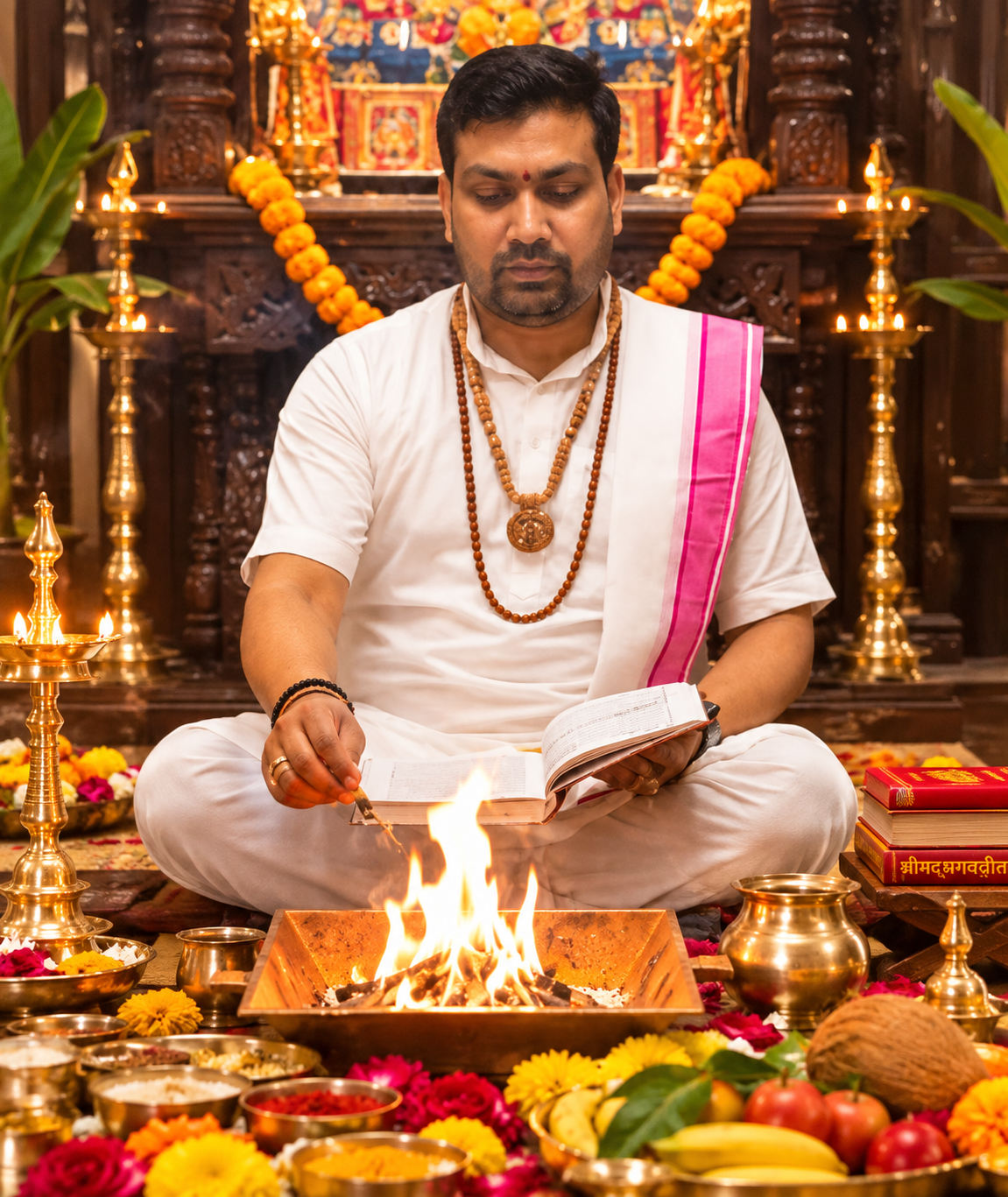

Online puja booking makes it easier for families to arrange a meaningful puja with clear service details, trained pandits, transparent pricing, Sankalp guidance, and remote participation where available. Whether the requirement is a home ceremony, temple worship, festival observance, or another traditional ritual, the right booking process should clearly explain what will be performed before payment.
This guide explains how to choose a dependable puja service, verify the priest, understand participation and samagri, compare different pujas, and complete a safe, informed booking. It is especially useful for a devotee who wants clarity about the ceremony, priest, timing, inclusions, and follow-up arrangements.
What Are Online Puja Booking Services?
Online puja booking services allow a family to select a ceremony digitally, provide the required details, confirm the schedule, understand the format, and complete the booking through a website.
The religious ceremony itself remains rooted in traditional practice. The internet is mainly used for communication, scheduling, payment, and remote participation. Depending on the selected puja service, the family may join through live video, receive guidance from a priest, or have the ceremony performed on its behalf.
A dependable provider should explain whether the service is private or shared, where the ritual takes place, who performs it, what is included, and what the family receives after completion.
How Do You Choose the Right Puja Before Booking?
Choosing the correct puja should begin with the religious occasion and family requirement, not simply the package price.
Different pujas may involve different Mantras, materials, priests, timings, and procedures. A Satyanarayan ceremony, Rudrabhishek Puja, Graha-related worship, or Griha Pravesh cannot be treated as identical services.
Before completing a booking, ask:
- What is the purpose of the ceremony?
- Is the event connected with a festival or family milestone?
- Does the priest need to visit the home?
- Is remote participation suitable?
- Is a particular date important?
- Is the ceremony individual or shared?
A clear answer helps the devotee choose the appropriate service instead of selecting the most expensive option.
Why Should You Verify the Pandit or Purohit?
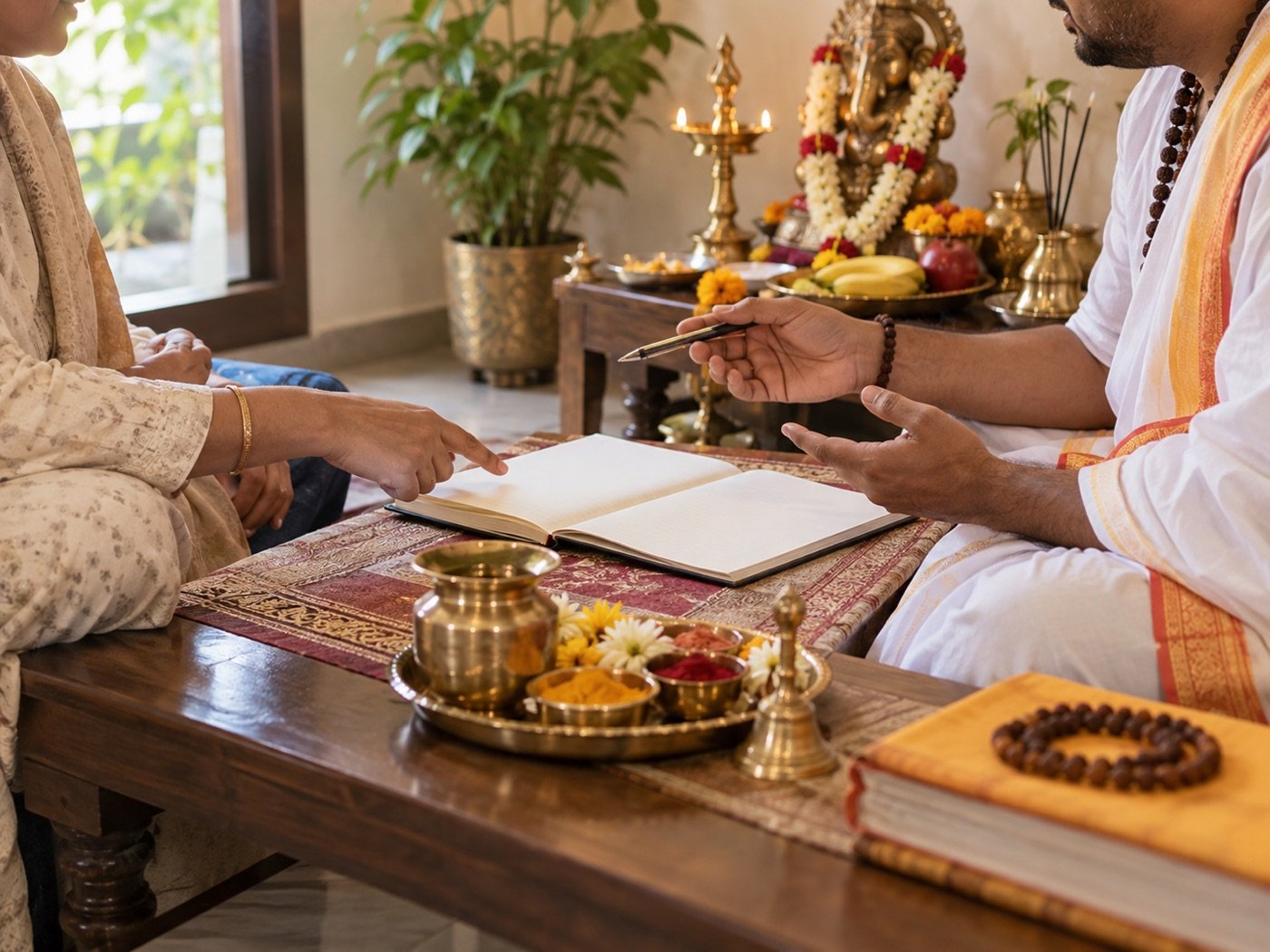
The person conducting the ceremony is one of the most important trust factors.
Before you book a Pandit, check whether the provider identifies the Pandit or clearly explains how priests are assigned. Useful information can include traditional training, language, location, years of practice, and the ceremonies they regularly perform.
Terms such as verified Pandits, experienced Pandits, experienced priests, or Vedic Pandits should be supported by meaningful information rather than used as generic promotional language.
Depending on the region, the priest may also be called a Purohit, Pujari, or one of the platform's listed Purohits.
A customer should be able to verify who is responsible for the ceremony before making payment.
What Should a Puja Service Include?
A professional service page should clearly explain what the family receives.
The scope may include:
- priest arrangement;
- Sankalp;
- puja samagri;
- Mantra recitation;
- Havan or Homa;
- remote participation;
- photographs;
- Prasad;
- delivery;
- final price.
Not every ceremony includes the same items. A guided service may require the family to prepare some Samagri, while another arrangement may have everything prepared at the performance location.
The family should also check whether post-ceremony items are delivered to your home or require separate shipping.
A transparent puja service should list inclusions and exclusions clearly before the booking is finalized.
How Do Online Puja and Temple Puja Work?
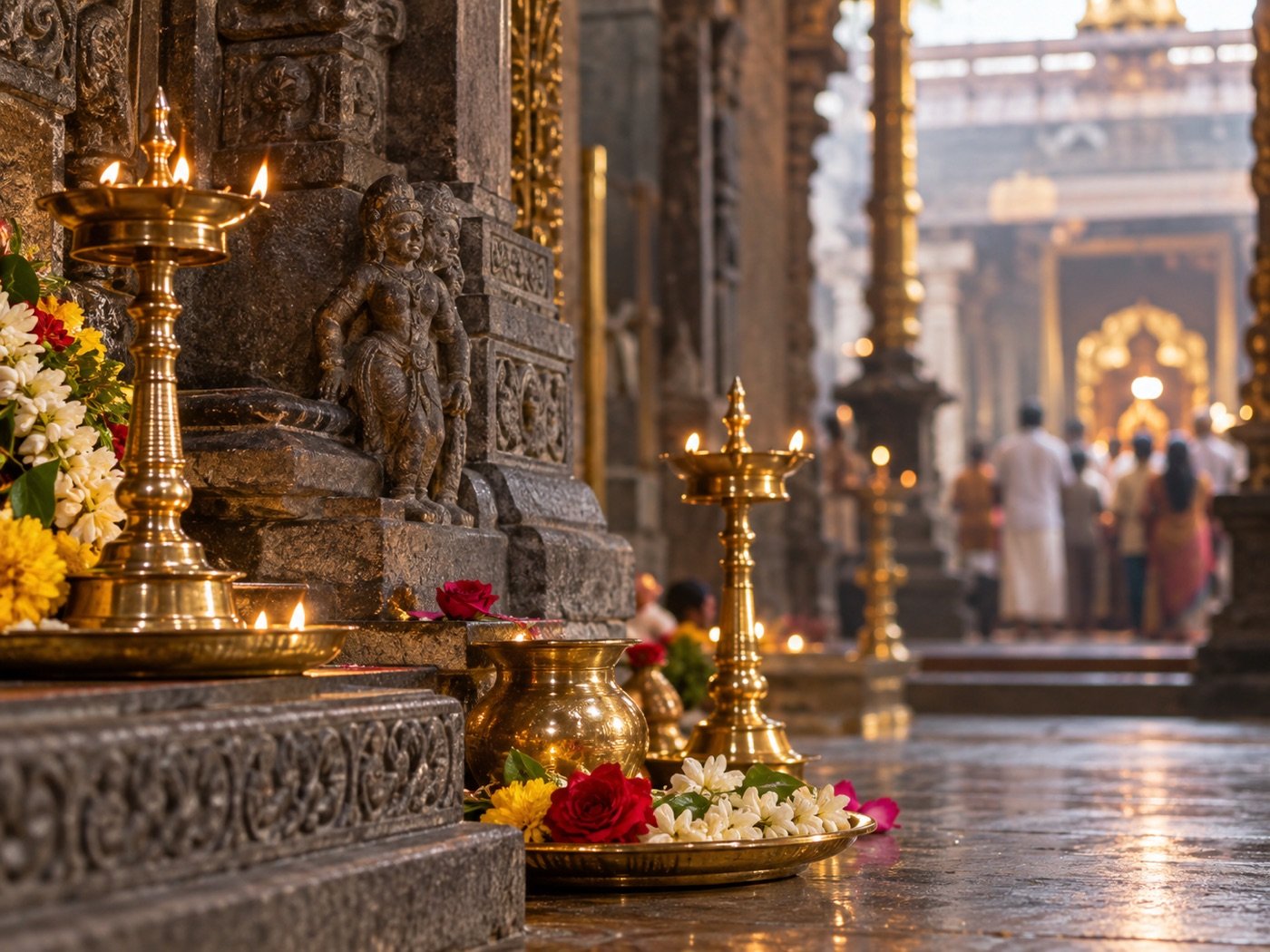
An online puja can be performed in several ways.
A priest may conduct the ceremony on behalf of the family, guide the family remotely, or allow participation through live streaming. Some ceremonies may also include darshan when performed at a sacred location.
A temple-based ceremony can be suitable when worship is specifically connected with a deity or location. Before selecting a temple puja, confirm:
- the exact place;
- priest details;
- Sankalp process;
- participation format;
- whether the ceremony is individual or shared;
- what follow-up is provided.
A seamless online process should make these points easy to understand.
If you want an authentic online puja, clarity about location and participation is more important than broad promotional claims.
Can You Book a Pandit for Home Puja?
Yes. Some platforms let families book a Pandit digitally for a ceremony that is later performed physically at home.
This is especially relevant for services such as Griha Pravesh, Satyanarayan worship, family ceremonies, and selected Vedic pujas.
For families searching for Pandit booking in Bangalore, it is important to confirm whether the service includes an in-person visit across Bangalore or only remote participation.
The same principle applies across major Indian cities.
A proper Pandit booking should confirm:
- city;
- date;
- language;
- ceremony type;
- priest availability;
- expected duration.
This keeps the process more hassle-free and reduces confusion.
Which Vedic Puja and Ritual Options Are Common?
Different families may require devotional worship, family ceremonies, fire ceremonies, festival observances, or Graha-related services.
Rudrabhishek
Rudrabhishek is associated with Shiva worship and may include Abhishek, Mantras, offerings, and other prescribed steps.
The exact ritual can differ depending on the selected package.
Satyanarayan Puja
Satyanarayan worship is traditionally associated with Lord Vishnu and may be arranged on an auspicious occasion or according to family practice.
Shanti Puja
A Shanti Puja may be connected with peace, Graha-related worship, or another traditional requirement.
If the ceremony is associated with Shani or another planetary tradition, the provider should explain what is included.
Pitru-Related Ceremonies
Families may also arrange Pitru worship during Pitru Paksha, Amavasya, or another relevant period.
Some services may include Daan, depending on the traditional practice followed.
These sacred rituals should be explained respectfully and without fear-based claims.
How Do Sankalp, Puja Samagri and Timing Work?
A personalized puja usually begins with Sankalp details.
The priest may request:
- name;
- family member names;
- Gotra, if known;
- location;
- purpose;
- preferred date.
If Gotra is unknown, tell Pandit Ji instead of guessing.
Timing can also matter. Some ceremonies may depend on:
- festival dates;
- Muhurat;
- Amavasya;
- a full moon day;
- family tradition.
The appropriate ritual timing should be confirmed when relevant.
A clear process helps the devotee understand what to prepare and what the priest will arrange.
Can Astrology Help Determine Which Puja to Choose?
Some families seek guidance through astrology before selecting a ceremony.
An astrologer may suggest that the family explore a particular form of worship based on a Kundli or traditional belief. However, the provider should still explain the exact puja, its purpose, and what will actually be performed.
The service should never rely only on fear or exaggerated claims.
A religious or astrological recommendation should not be presented as a guaranteed solution for financial, medical, legal, or relationship problems.
If two options seem similar, ask Pandit Ji to explain the difference before the booking.
What Is the Difference Between Individual and Group Pujas?
An individual ceremony is usually arranged in a dedicated slot for one family.
This may be suitable when:
- the family wants dedicated participation;
- a specific Sankalp is required;
- the schedule must be private;
- the family wants direct interaction.
A group format may involve several devotees participating in the same larger ritual while individual Sankalp details are included according to the service format.
Neither option is automatically better.
The important point is to verify what type of arrangement you are purchasing.
Different pujas may be available in different formats depending on the occasion and provider.
What Should You Check Before You Book Online?
Before you book online, compare the complete service rather than only the price.
Check:
| Detail | What to Confirm |
|---|---|
| Priest | Who performs the ceremony |
| Sankalp | Which details are required |
| Format | Individual or group |
| Location | Home, temple, or service venue |
| Materials | Included or self-arranged |
| Participation | Live, guided, or performed on behalf |
| Timing | Fixed or flexible |
| Delivery | Photos, recording, or Prasad |
| Policies | Cancellation and rescheduling |
| Price | Complete payable amount |
A clear booking process protects both the family and the provider.
How Can Families Participate from Bangalore, Across India, or Abroad?

Digital access can make religious services easier for families who live in different locations.
A person in Bangalore may arrange a ceremony in another city, while relatives participate remotely. Similarly, families across India can coordinate one ceremony without everyone travelling.
If a family lives anywhere in the world, check:
- Indian ceremony time;
- local time-zone difference;
- remote participation method;
- payment options;
- delivery restrictions.
The same principles apply whether the service is arranged locally or internationally.
A good provider should make the process seamless while explaining what the family should expect.
What Makes Authentic Vedic Rituals Different from Marketing Claims?
The phrase authentic Vedic rituals should be supported by clear information about the ceremony, priest, Mantras, procedure, and service format.
Likewise, authentic Vedic puja services should explain the actual religious process instead of relying on generic superlatives.
A website may refer to experienced Vedic practitioners or expert priests, but these claims should be backed by useful context.
The purpose is to help the family understand what will happen during the ritual.
Religious ceremonies may be associated with faith, prayer, or divine blessings, but responsible communication should avoid guaranteed material outcomes.
How Can Devotees Experience Divine Blessings Responsibly?
Families may arrange worship to experience divine blessings, express devotion, observe a family tradition, or mark an important occasion.
A ceremony can also invite divine blessings within the context of faith and personal belief.
However, such language should not be used to guarantee:
- money;
- marriage;
- medical recovery;
- legal victory;
- business success.
The role of the provider is to explain the religious service honestly and perform it according to the agreed scope.
That creates a more respectful puja experience for the family.
Frequently Asked Questions About Online Puja Booking
How do I book a ceremony online?
Choose the required puja, review the service details, submit Sankalp information, confirm the schedule, check the price, and complete the booking through the official payment process.
Can I book experienced Pandits?
Yes, where the provider offers that option. If you want to book experienced Pandits, review priest details and confirm availability before payment.
Is Pooja different from Puja?
Pooja is an alternative English spelling of the same term and is commonly used on many Indian websites.
Can I participate from the comfort of my home?
Yes, where remote participation is offered. The family may join from the comfort of your home through the platform specified by the provider.
What are Sevas?
Sevas can refer to devotional offerings or religious services, particularly in sacred-location contexts. The exact scope should be explained by the provider.
Can I book a ceremony in Bangalore?
Yes, depending on availability. For Bangalore, confirm whether the priest will visit physically or whether the service will be remote.
What does proper Vedic practice mean?
A proper Vedic approach should be described through the actual ceremony, priest, Mantras, and procedure rather than used only as a promotional phrase.
Are Homams available?
Some providers offer Homams and other fire ceremonies. The exact format, priest count, materials, and duration should be checked before payment.
Important Things to Remember Before Booking
- Choose the puja according to the religious requirement, not only the price.
- Verify the priest, location, service format, and inclusions.
- Confirm whether the ceremony is individual or shared.
- Check Sankalp details carefully.
- Understand which materials are included.
- Confirm the exact ritual schedule when timing matters.
- Ask whether video, photos, or physical delivery are included.
- Review cancellation and privacy policies before payment.
- Use official payment channels.
- Families can arrange online puja services locally or internationally when the provider supports them.
- Respectful religious communication should explain traditional Hindu practices without promising guaranteed outcomes.
- Clear information, reliable priests, and transparent policies create a better religious service than exaggerated marketing claims.